
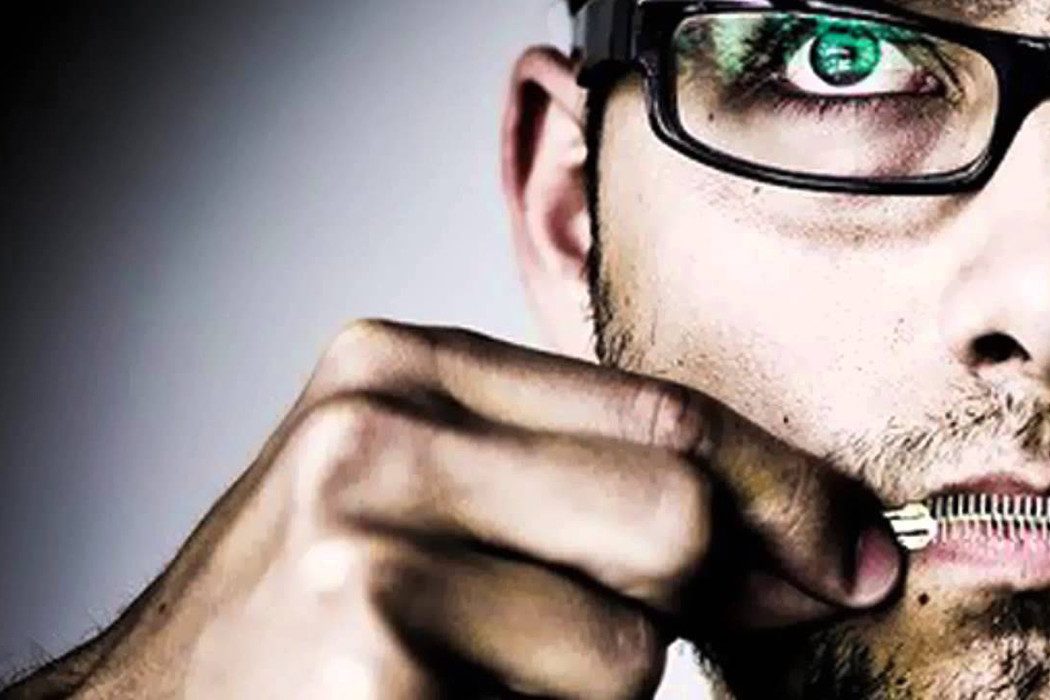
When we speak of threats to free speech, the most common current concern tends to be about acts of terrorism, perpetrated by religious zealots or reactionary cultural crusaders. The murders of Theo van Gogh, the Charlie Hebdo staff, and Dr Malleshappa Kalburgi come to mind. We denounce these acts, rightly.
However, what we are doing, contrary to what social media “activists” seem to believe, is not a “free speech” protest. Terrorist acts are the easiest things to condemn. They are heinous crimes—acts of war, if you think “crime” is too small a label for the magnitude of their destructiveness. But to treat terrorism as the central free speech problem of our times misses the point.
Unless committed or condoned by the official powers of the state, terrorism (even when directed in retaliation for speech) is a security issue, not a “free speech” or “censorship” issue, any more than a spike in the murder rate would be a “capital punishment” issue. Terrorism has power but no authority, no generally recognised legitimacy. In states where it has official sanction or some pretence of legitimacy, it takes on a different character. It becomes “tyranny” or “despotism” rather than “terrorism”; the difference in the type of harm done by these different categories is not mere semantics. When you have the policies of your government and the moral approval of the larger polity on your side, the way we do against terrorists like the ones mentioned above, it is an entirely different experience from living under the thumb of the Stasi or being a journalist in Saudi Arabia.
By focusing primarily on the morally clear-cut problem of terrorism, we distract ourselves from the steady erosion of expressive and intellectual freedom by less obvious sources from within otherwise legitimate features of our own civic and political cultures.
In democratic societies any “chilling effect” terrorists have on speech is akin to the constraints violent criminals put on our physical liberty. That constraint is real too, and I don’t mean to minimise its gravity in any way. But we should remember that by focusing primarily on the morally clear-cut problem of terrorism, we distract ourselves from the steady erosion of expressive and intellectual freedom by less obvious sources from within otherwise legitimate features of our own civic and political cultures.
One increasingly worrisome threat to free expression is governmental intrusion. In January 2015, the PEN American Center published a study, titled ‘Global Chilling: The Impact of Mass Surveillance on International Writers’, which found that, thanks to unprecedented monitoring, “the levels of self-censorship reported by writers living in democratic countries are approaching the levels reported by writers living in authoritarian or semi-democratic countries.”
On the face of it, this is an odd finding. In today’s instant-mass-media, no-holds-barred, talking-head culture, it feels rather like speech is more unfettered than ever. Vitriolic diatribes pass for “public discourse”. Every point of view, no matter how absurd or inflammatory, has a dedicated website with a significant “community” thriving around it. Many of the sentiments most loudly expressed are anti-government, anti-establishment, anti-authority. Still, we all know that the report is exactly on point. That’s because the chilling effect works differently in democratic countries from the way it works in authoritarian ones. It’s more diffuse and subtle.
The chilling effect works differently in democratic countries from the way it works in authoritarian ones. It’s more diffuse and subtle.
At a basic level, you really are free to say what you want. No one is locking you up for calling your head of state an idiot or saying that your legislators are corporate cronies. In every democratic country there are legions of pundits and almost as many comedians who have built entire careers out of vilifying elected officials.
But equally large numbers of people feel, lately, that there are invisible lines that they had better not cross. Most of the unrestrained chatter that dominates the media comes from the surface level, from commentators preoccupied with partisan bickering, campaign rhetoric and decoy ideological battles posing no real threat to the power structure. But journalists who do deep investigative work often say that they live with a steady hum of stress in the background. The Washington Post reported in February that over two-thirds of the journalists surveyed in a comprehensive Pew Research Center study thought they were under constant surveillance.
Government overreach is not the only thing impairing our intellectual and expressive freedoms. Civil society today is mired in a culture of speech codes that are strangling the public discourse. Rightists usually identify liberal “political correctness” as the culprit. But the problem is hardly limited to the left side of the proverbial “aisle”.
“Politically correct” is not (and never was) a neutral description of what anyone was trying to achieve by encouraging respectful standards of civic interaction. The term implied an insidious speech code and social-engineering agenda that had little to do with what those efforts were really about. It was a clever Newspeak shorthand to shut down that effort without reflection or debate.
The speech code culture is a double-edged sword against intellectual discourse. Even more disturbing than censorship is its rarely noted corollary, mandated speech—the push to strong-arm people into using certain phrases or expressing certain views as a litmus test of being “patriotic” or “culturally tolerant” and the like (the specifics vary, depending on which part of the political/ideological spectrum one favours). Whereas leftists tend to promote negative speech codes (attempting to rid language of all “offensive” components) the right wing has established a positive speech code, built on Orwellian neologisms that inject politically motivated insinuations into the very names of things so as to cut off the debate at the issue-framing stage.
The term “politically correct” is itself an example of this. It is not (and never was) a neutral description of what anyone was trying to achieve by encouraging respectful standards of civic interaction. The term implied an insidious speech code and social-engineering agenda that had little to do with what those efforts were really about. It was a clever Newspeak shorthand to shut down that effort without reflection or debate.
If we think in ordinary English, instead of Politicalese, for a minute, it becomes clear that right-wing politics (at least in the US) is steeped in exactly the kind of ritual speech and expressive conduct that can be accurately described as demanding “political correctness”. They attack adversaries for not joining them on certain expression bandwagons: everything from not wearing a flag lapel pin to not adopting sound bites like “islamofascist” and “family values”. Even saying “Happy Holidays” instead of “Merry Christmas” has been denounced as a salvo in the alleged “war on Christmas.”
The Left has also become deeply ensconced in a speech-code culture of its own. “Political correctness”—though I dislike the term—does describe a real phenomenon, a new orthodoxy masquerading as liberalism.
That said, the Left has also become deeply ensconced in a speech-code culture of its own. “Political correctness”—though I dislike the term—does describe a real phenomenon, a new orthodoxy masquerading as liberalism. At one time, its goals may have been “encouraging respectful standards of civic interaction,” but it has long since become a system of proscribing and prosecuting words and (presumed) attitudes behind them. People have been fired from their jobs for using words (like “niggardly”) that simply sound like other words, to placate people who don’t know (and don’t care to learn) the etymology. An activist working to better the lives of undocumented immigrants gets a severe dressing down for saying “alien” instead of “undocumented” by people who probably haven’t made a fraction of the contribution to immigrant lives that she had made.
Late last year, an exasperated email circulated among some friends of mine after a grand jury failed to indict the police officer who killed Eric Garner by choking him until he had a heart attack. The writer of that email recounted with frustration the deaths of Michael Brown and Trayvon Martin (unarmed civilians whose killers were cleared of murder charges). “I used to think all that stuff, that we heard about in history class as kids,” she said, “was left behind in the ’50s and ’60s and we are living in a better world, but now I see it’s all been covered up and simmering and suddenly the lid has come off. Some people just want to go back to the glory days when ‘men were men’ and you could just lynch a nigger when you felt like it!”
More than one of the recipients of that message wrote back “shocked” at this use of the word “nigger” and duly scolded the writer. In contrast, I recently heard a young acquaintance of mine say, “I am not a racist or anything…. I mean, I would never call anyone, you know, the N-Word!” and then go on to blame black people for courting racist treatment by committing by committing too many crimes, having no work ethic and smoking crack.
All of this emphasis on curtailing what we say is distracting us from the real work of learning to understand and appreciate one another. It detracts from efforts to tackle real problems, by deluding ourselves that the solution is the simple matter of finding the right words.
What’s remarkable about speech code culture is that it allows the speaker of this stunningly insulting statement to stay within acceptable community standards (and even claim that she is “not a racist”) simply by adhering to the self-censoring protocol of invoking the “N-Word”, instead of “nigger.” She expressed exactly the sentiment which endows this word with its hatefulness, yet she is supposedly “not a racist” because she would never use the word. Meanwhile, the email writer’s use of the actual word, despite it being deployed to express precisely the opposite of everything that’s offensive about the word, was registered as a social transgression.
These are perhaps trivial examples. But they reveal how much we have internalised the speech codes and how much we treat the speech code violations as if they were tantamount to the sentiment generally associated with them, or even with actual violence or harm. All of this emphasis on curtailing what we say is distracting us from the real work of learning to understand and appreciate one another. It detracts from efforts to tackle real problems, by deluding ourselves that the solution is the simple matter of finding the right words.
What’s worse, while reducing the expression of ideas into a formulaic transaction chokes off intellectual engagement, it does nothing to achieve the original goal of tamping down on hateful and intimidating speech and conduct in the public sphere. “Haters gonna hate,” as the saying goes. All you have to do is log on to Twitter or read the comments section of any online article to see that the most degenerate forms of hate speech are alive and well.
While reducing the expression of ideas into a formulaic transaction chokes off intellectual engagement, it does nothing to achieve the original goal of tamping down on hateful and intimidating speech and conduct in the public sphere.
Workplaces have extensive “sensitivity training” focused on what people say within earshot of members of the group they might offend. But all it does is give the employer a signed warrant of absolution for having met the “requirement” of providing the training and the trainees just learn to work around it and speak in code instead of engaging honestly with each other and try to develop genuine respect and tolerance. We are squabbling about using the “N-Word” even as actual racial violence is raging uncontrollably in a way not seen in decades. As for the immigrant-rights activist mentioned above, you can bet that henceforth, that person will waste considerable time and energy editing what she says—time and energy that could have been spent in research or fundraising or field work to solve the real problems of immigrants.
The biggest casualty of the speech code culture is intellectual depth in the public discourse. You’d think liberalism would be the last place you’d run into anti-intellectualism or intolerance for ideas. But we have redefined tolerance as inoffensiveness. And we are undercutting the very thing we are supposed to stand for: free societies of free individuals who engage freely together to solve problems and create a liveable world.
Liberalism is now almost as frequently guilty of fostering anti-intellectualism as conservatism has been throughout history. We are so busy being outraged at everything that affronts our values that we abdicate the duty of refuting it. Refusing to give others their argument—as a policy—is the exact opposite of what the liberal tradition has taught us about the marketplace of ideas.
Liberalism is now almost as frequently guilty of fostering anti-intellectualism as conservatism has been throughout history. We are so busy being outraged at everything that affronts our values that we abdicate the duty of refuting it.
The 1994 book The Bell Curve: Intelligence and Class Structure in American Life, which purported to show a genetic basis for an intelligence differential among the races, was considered so offensive that it was widely boycotted. I was called out by strangers and lectured for my “hatred” because I carried a copy of it to read on my commute. The result of this kind of “freezing out” of the book was that only the right-wing zealots, who were already predisposed to agree with its conclusions, ended up reading it and being able to claim the right to argue about it. For a long time there was not a single rigorous rebuttal available for the lay reader. The only thing you heard from liberal commentators were expressions of outrage that this was allowed to be published.
To this day, many people, even people on the political Left who don’t want the book’s thesis to be correct, believe—secretly, if not admittedly—that it actually proved what it claims to have proved. Despite the chagrin of many, I did read the book and I can tell you that it was poorly argued and based on patently wrongheaded interpretations of evidence (even assuming the proffered evidence was sound). If it hadn’t been for the culture of being chronically offended by opposing views instead of robustly engaging them, this book would have been roundly refuted a long, long time ago, instead of persisting in the mainstream public consciousness. Of course any genuine attempt at critiquing the book was immediately met with charges of “political correctness.”
Speech-code culture doesn’t just constrain the expression of ideas. It also turns tables and condemns responses to expression, treating counterargument as if it were a form of censorship. It does so by erasing the distinction between criticising the substance of speech and attacking the freedom of the speaker to say it at all.
Socially mandated speech codes enjoy the moral approval of large segments of civil society, which makes it a powerful impediment to intellectual openness and debate, shutting us up from within in a way the most horrific act of terrorism can never succeed in doing.
For example, after the Charlie Hebdo murders, there were people, including several news outlets and prominent journalists, who, while condemning the murders, opted out of the “Je Suis Charlie” bandwagon for various reasons. Personally, I wouldn’t claim to “be” Charlie because I find it a of hollow pseudo-solidarity that requires me to risk nothing and yet somehow gain a bloated sense of bravery and proximity to the great events of the day. Many people declined to do so because they did not approve of the Charlie Hebdo brand of humor and/or had been critical of the publication in the past. These people were excoriated for being “against free speech”—the assumption being that, if you criticise someone’s speech, you’re advocating a ban on it.
It’s an alarmingly common view. American media personality (and one-time governor and vice-presidential candidate) Sarah Palin habitually complained that the media was impeding her freedom of speech because they asked hard follow-up questions and exposed weaknesses in her expressed views.
Of course, this “speech code culture” is a softer threat than that of censorship or surveillance or broad, discretionary police powers vested in the state, which has the monopoly on the use of force. But socially mandated speech codes enjoy the moral approval of large segments of civil society, which makes it a powerful impediment to intellectual openness and debate, shutting us up from within in a way the most horrific act of terrorism can never succeed in doing.

locowin casino bonuscode
Nur Anbieter mit einer deutschen Glücksspiellizenz dürfen in Deutschland operieren und ihre Dienste anbieten. Es ist von großer Bedeutung,
in legalen Online-Casinos mit einer deutschen Lizenz zu spielen. Die strenge Glücksspielvorschriften der deutschen Regierung stellen sicher, dass nur lizenzierte Unternehmen ihre Dienste den Spielern in Deutschland anbieten können. Eine geprüfte Liste sorgt dafür, dass Spieler
nur in Casinos mit einer gültigen Casino Lizenz spielen, die den deutschen Regularien entsprechen und somit höchste Sicherheitsstandards garantieren. Dennoch können deutsche Spieler in europäischen und internationalen Casinos legal spielen, weil diese von den deutschen Gesetzen nicht betroffen sind.
Dies ist die beliebteste Art von Bonus unter deutschen Spielern. In den Anfangszeiten mussten die Spieler die Casino Software installieren, um Casino spielen zu können. Es hat zahlreiche Auszeichnungen erhalten, unter anderem als bester Hersteller von mobilen Casinospielen.
Es ist ein führender Hersteller von Online Casinospielen. Dieses Zahlungssystem ist bei deutschen Spielern sehr
beliebt.
References:
https://online-spielhallen.de/boaboa-casino-promo-codes-und-angebote/
GGBet Casino Freispiele Leitfaden
In den Online Casinos mit Lizenz aus Deutschland könnt ihr
lediglich auf virtuelle Automatenspiele zurückgreifen. Nicht berücksichtigen müsst ihr im Casino ohne Limit das Einzahlungslimit von 1.000€
pro Monat. Alle Casinos, die mit einer Lizenz einer anderen europäischen Regulierungsbehörde agieren, müssen diese Vorgaben nicht beachten.
Denn ein Casino ohne Limit darf nicht nur Slots anbieten, sondern auch Tischspiele, Live Casino Spiele und andere Casino Spiele von sehr vielen Softwareanbietern. Casinos ohne Beschränkungen bieten eine große Spielauswahl mit tausenden Slots,
Tisch- und Kartenspielen sowie spannenden Live Dealer Games.
Neben zahlreichen Promotions für Stammspieler kann Wyns mit einem fairen 100 %
bis zu 500 € Neukundenbonus aufwarten, der von 200
Free Spins flankiert wird. Natürlich werden sich nicht alle Bonusgelder
freispielen lassen. Das 1-€-Einsatzlimit in deutschen Online-Casinos soll
dem Spielerschutz dienen. Bei diesem Anbieter könnt ihr ohne monatliches
Einzahlungslimit von 1.000€ und das Einsatzlimit von 1€ pro
Spielrunde spielen.
References:
https://online-spielhallen.de/hitnspin-casino-test-bonus-spiele/
best VIP casinos 2026
Enhanced by high-definition graphics and responsive interfaces, the software integration not only elevates gameplay but also fortifies the casino’s commitment to technological excellence and customer satisfaction. Utilizing software from
industry-leading providers, the casino ensures each game runs smoothly across various platforms.
These regulatory bodies are stringent in their requirements, involving regular audits and checks that guarantee fairness and
transparency in all casino operations. The ville Casino
Townsville operates with utmost adherence to legal and regulatory frameworks, ensuring all gaming activities are conducted in a secure and ethical manner.
This approach ensures that all players can manage their funds efficiently and securely, according to their individual
preferences.
For group bookings guests will select from one of
our incredible banquet options. Book a spot on the restaurant
balcony or in Miss Songs’ exclusive private dining room for your group booking of
up to 20 people. The Palm House has a range of
options for larger group bookings to suit all occasions including al fresco dining and a private dining
room. Reservations for groups of 1 to 20 guests can be
made online, with reservations available 3 months prior to the
dining date.
Two casinos in northern Australia found at high risk of being
used for money laundering have been ordered to undertake an external audit.
The operators of the casinos both say they take their obligations seriously and will co-operate with the authorities.
Two casinos in Townsville and Darwin will undertake external audits of
their anti-money laundering measures. In January, Echo said Jupiters Townsville had limited expansion opportunities and offloading
the casino would allow the company to focus on its Sydney, Brisbane and
Gold Coast properties. “[Jupiters Townsville] is the worst-performing casino in Australia by a long way,” he said.
References:
https://blackcoin.co/best-payid-pokies-in-australia-a-comprehensive-guide/
Gambling laws Australia
Words that can be used instead of ‘key’ and ‘important’
include significant, critical, essential, vital, fundamental, and
pivotal. Some of these words are absolute synonyms, meaning
they have the exact same meaning as “important.”
Other words are near synonyms, meaning they are similar in meaning but not identical.
The word “important” suggests a degree of significance,
whereas “crucial” implies something that is absolutely necessary or
critical. Understanding the nuances of these synonyms can help
writers and speakers convey significance and relevance with precision and impact.
In this article, we will explore a variety of synonyms for the word “important” and how they can be used to enhance
communication and expression.
“Important” implies value or significance, while “significant” denotes something that has a noticeable or meaningful impact.
Important things can include events, people, ideas, or objects that have a significant impact on our lives.
The word “important” is an adjective that describes something that has great significance,
value, or influence.
References:
https://blackcoin.co/15-top-uk-no-wagering-no-deposit-casinos-you-shall-try-this-year/
PlayAmo Casino Australia mobile
Lucky Green Casino throws around that flashy 150% welcome bonus like it’s free money,
but every Aussie spinner needs to read the fine print before diving in. Additional options include Plinko, Rocketman, and Aviatrix, each offering quick-fire gambling
action with instant results. NetEnt’s contribution includes classics like Starburst and Gonzo’s Quest alongside
newer releases featuring advanced graphics and innovative bonus mechanics.
The bonus round features multiple multiplier symbols and expanding wilds that
can transform modest bets into substantial wins. Money Train 2 from Relax Gaming
brings wild west excitement with its unique bonus
buy feature and expanding reels mechanism. This high-volatility slot delivers a 96.5% RTP with
maximum wins reaching 5,000x the initial bet.
The lack of payment method transparency becomes problematic when you’re ready to cash out.
Players in Queensland and South Australia report more frequent payment blocks compared to other states, likely due to stricter local gambling regulations.
Certain IP addresses trigger additional verification requirements or outright payment method restrictions.
Players report surprise processing charges ranging from 2-5% on withdrawals, with the exact fee only revealed during the cashout process.
Crypto withdrawals typically clear within hours once approved,
while traditional methods can stretch beyond a week. Credit cards work for deposits but the site provides almost zero detail about
which specific cards or providers they accept.
References:
https://blackcoin.co/where-luxury-meets-excitement-pullman-reef-hotel-casino/
keno rules
Ripper Casino is home to all sorts of casino games. The library offers mostly
slots and a sprinkling of RNG table games. Additionally, the site is secure, simple and extremely fast
to load when playing on smartphones.
Great for lower-cost crypto transactions Ultra-fast
crypto option Deposits are quick and painless, and withdrawals
come through smooth as a summer breeze (with a few exceptions).
References:
https://blackcoin.co/roo-casino-quick-overview/
macrorecruitment.com.au
online slot machines paypal
References:
macrorecruitment.com.au
jobdoot.com
online casino accepts paypal us
References:
jobdoot.com